
 visit site
Mastering tracheostomy care at home: Your ultimate guide to proper nutrition, hygiene, and emergency preparedness.

Introduction to Tracheostomy Care
Understanding the basics of tracheostomy care is essential for individuals who have undergone a tracheostomy procedure. This section will provide an introduction to tracheostomy care, explaining what a tracheostomy is and highlighting the importance of home care.
What is a Tracheostomy?
A tracheostomy is a surgical procedure that involves creating an opening in the front of the neck and directly into the trachea (windpipe). This opening, called a tracheostomy stoma, allows for a direct airway access and is typically fitted with a tracheostomy tube. The tube helps to maintain an open airway and assists with breathing.
Tracheostomies are often performed for various reasons, including:
- Severe respiratory conditions that require long-term ventilation support
- Obstruction of the upper airway
- Facial or neck trauma
- Paralysis or weakness of the muscles involved in breathing
Why Home Care is Important
After a By providing diligent home care, individuals with tracheostomies can:
- Prevent infections and promote healing at the tracheostomy site
- Maintain proper respiratory hygiene by managing mucus build-up and suctioning techniques
- Ensure adequate nutrition and hydration for overall well-being
- Recognize and respond to emergencies promptly, reducing the risk of complications
Home care plays a vital role in improving the quality of life and reducing the risk of complications for individuals with tracheostomies. By following the recommended care routine and staying vigilant, individuals and their caregivers can effectively manage the tracheostomy at home and promote a safe and healthy recovery.
Setting Up for Home Care
When it comes to caring for your tracheostomy at home, proper setup is essential to ensure a safe and comfortable environment. This section will cover the necessary supplies you’ll need and how to create a clean and safe setting for tracheostomy care.
Necessary Supplies
Before starting tracheostomy care at home, it’s important to gather the necessary supplies. Here are some of the essential items you will need:
Supplies
Tracheostomy tube
Tracheostomy ties or Velcro straps
Sterile saline solution
Sterile gauze
Tracheostomy cleaning brush
Suction catheters
Lubricating gel
Hand sanitizer
Disposable gloves
Waste disposal bags
Spare tracheostomy tube (in case of emergencies)
Having these supplies readily available will streamline the care process and ensure that you have everything you need to properly care for your tracheostomy.
Creating a Clean and Safe Environment
Maintaining a clean and safe environment is crucial for tracheostomy care. Follow these steps to create an environment conducive to proper care:
- Wash your hands: Before handling any tracheostomy supplies or touching the tracheostomy site, make sure to wash your hands thoroughly with soap and water. This helps prevent the introduction of germs and reduces the risk of infection.
- Choose a clean area: Select a well-lit and clean area for tracheostomy care. Avoid areas with excessive dust, pet dander, or cigarette smoke, as these can irritate the airway and increase the risk of complications.
- Disinfect surfaces: Regularly clean and disinfect surfaces around the tracheostomy care area. Use a mild disinfectant to wipe down any tables, countertops, or equipment that may come into contact with the tracheostomy supplies.
- Keep the area clutter-free: Minimize clutter in the tracheostomy care area to prevent accidental spills or injury. Ensure that all supplies are organized and easily accessible when needed.
- Monitor humidity levels: Maintain a comfortable level of humidity in the room to prevent dryness and irritation of the airway. Use a humidifier if necessary and ensure it is cleaned regularly to prevent the growth of bacteria or mold.
By setting up a clean and safe environment, you can help reduce the risk of complications and ensure a smooth and effective tracheostomy care routine at home. Remember to regularly assess the cleanliness of the area and replenish your supplies as needed.

Daily Care Routine
Proper daily care is essential for maintaining the health and functionality of a tracheostomy. This routine involves cleaning the tracheostomy tube, performing suctioning techniques, and taking care of the skin around the tracheostomy site.
Cleaning the Tracheostomy Tube
Regular cleaning of the tracheostomy tube is crucial to prevent the buildup of mucus, secretions, and debris. This helps to maintain clear airflow and minimize the risk of infections. Here are the steps involved in cleaning the tracheostomy tube:
- Wash your hands thoroughly with soap and water, and put on clean gloves.
- Gently remove any inner cannula or disposable inner tube, if applicable, and discard it according to the proper disposal guidelines.
- Clean the inner and outer surfaces of the tracheostomy tube using a clean cotton swab or a soft-bristled brush soaked in warm saline solution or sterile water. Be gentle to avoid causing discomfort or injury.
- Rinse the tracheostomy tube with sterile water or saline solution to remove any cleaning solution residue.
- Inspect the tube for any signs of damage or blockage. If you notice any issues, consult a healthcare professional for further guidance.
- Dry the tracheostomy tube thoroughly before reinserting it. Ensure that it is completely dry to prevent irritation or infection.
Suctioning Techniques
Suctioning helps to remove excess mucus or secretions from the tracheostomy tube, improving breathing and reducing the risk of blockages. It is important to follow proper suctioning techniques to ensure effective and safe removal of the secretions. Here are the general steps involved in suctioning a tracheostomy tube:
- Wash your hands thoroughly and put on clean gloves.
- Connect the suction catheter to the suction machine or wall suction unit, ensuring that the machine is set to the appropriate pressure.
- Lubricate the suction catheter with a sterile water-soluble lubricant.
- Insert the catheter into the tracheostomy tube until resistance is felt, and then withdraw it slightly.
- Apply suction by covering the suction control vent with your finger or using the suction machine.
- Rotate the catheter while gently withdrawing it to suction secretions from all sides of the tracheostomy tube.
- Limit the suctioning time to 10-15 seconds to avoid causing irritation or damage to the airway.
- Allow the patient to rest and recover after each suctioning pass, ensuring they are comfortable and breathing comfortably.
- Rinse the catheter with sterile water or saline solution between passes to remove any accumulated secretions.
- Dispose of the used suction catheter according to proper disposal guidelines.
Skin Care Around the Tracheostomy Site
Proper skin care around the tracheostomy site is essential to prevent infection, irritation, and discomfort. Follow these guidelines for skin care:
- Clean the skin around the tracheostomy site daily using mild soap and water, or as directed by a healthcare professional.
- Gently pat the skin dry with a clean, soft towel. Avoid rubbing or scrubbing the area, as it may cause irritation.
- Inspect the skin for any signs of redness, irritation, or breakdown. Report any abnormalities to a healthcare professional.
- Regularly change the tracheostomy dressing, if applicable, according to the recommended schedule or as instructed by a healthcare professional.
- Ensure the tracheostomy ties or Velcro straps are clean and secure, but not overly tight, to prevent skin irritation and pressure sores.
- Maintain proper hygiene around the tracheostomy site and keep the area clean and dry.
By following a daily care routine that includes cleaning the tracheostomy tube, performing suctioning techniques, and taking care of the skin around the tracheostomy site, you can help ensure the well-being and comfort of individuals with tracheostomies. Always consult with a healthcare professional for specific instructions and guidance based on individual needs.
Managing Complications
Caring for a tracheostomy at home involves being aware of potential complications that may arise. By understanding the signs of infection, how to deal with mucus build-up, and troubleshooting common issues, caregivers can provide effective care for individuals with a tracheostomy.
Signs of Infection
Recognizing the signs of infection is crucial for early intervention and preventing complications. Some common signs of infection around the tracheostomy site include:
Signs of Infection
Redness and swelling around the stoma
Increased warmth or tenderness
Pain or discomfort
Presence of pus or discharge
Foul odor
Fever
If any of these signs are observed, it is important to promptly notify a healthcare professional. They can provide guidance on whether further medical attention is necessary and recommend appropriate treatment options.
Dealing with Mucus Build-Up
Mucus build-up is a common occurrence for
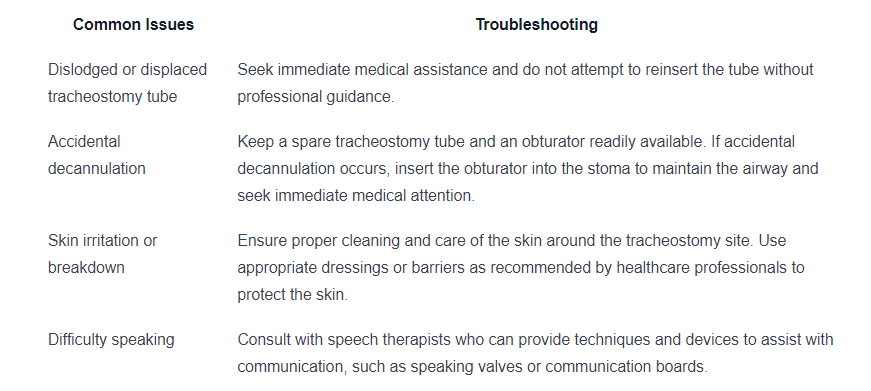
Regular communication with healthcare professionals is crucial to address any concerns related to mucus build-up. They can provide guidance on proper suctioning techniques and recommend suitable interventions to manage excessive mucus. While caring for a tracheostomy, caregivers may encounter various common issues that can be effectively addressed. These issues may include: It’s important to remember that each individual’s situation may vary, and healthcare professionals should be consulted for personalized guidance when troubleshooting common issues related to tracheostomy care. By being vigilant and knowledgeable about potential complications, caregivers can provide effective home care for individuals with a tracheostomy. Regular communication with healthcare professionals and prompt intervention when complications arise can help ensure the well-being and safety of those with a tracheostomy. Proper nutrition and hydration play a crucial role in the overall well-being and recovery of individuals with a tracheostomy. This section will discuss the importance of ensuring proper nutrition and meeting hydration needs for tracheostomy patients. Maintaining a well-balanced diet is essential for individuals with a tracheostomy. Adequate nutrition supports the healing process, boosts immunity, and provides the energy needed for daily activities. Here are some key considerations for ensuring proper nutrition: Proper hydration is vital for everyone, including tracheostomy patients. Good hydration helps maintain healthy mucous membranes, supports lung function, and promotes overall well-being. Here are some important points to consider regarding hydration: Incorporating a well-balanced diet and maintaining proper hydration are essential aspects of tracheostomy care. Consulting with healthcare professionals, such as registered dietitians and speech-language pathologists, can provide valuable guidance in meeting individual nutrition and hydration needs. When caring for a tracheostomy at home, being prepared for emergencies is of utmost importance. Recognizing emergency situations and knowing how to provide first aid can make a significant difference in the outcome. In this section, we will discuss how to recognize emergency situations related to tracheostomy care and provide essential first aid tips. It is essential for caregivers to be able to identify potential emergency situations related to tracheostomy care. Prompt recognition and appropriate action can prevent further complications and ensure the safety of the individual with a tracheostomy. Some common emergency situations to watch out for include: Remember, if you suspect an emergency situation, it is crucial to seek immediate medical help. Do not hesitate to call emergency services or your healthcare provider for guidance and assistance. Knowing how to provide first aid in tracheostomy-related emergencies can be lifesaving. Here are some general first aid tips for common emergencies: Remember, these are general guidelines, and it is crucial to consult with your healthcare provider for specific instructions and to receive proper training in first aid for tracheostomy-related emergencies. By recognizing potential emergency situations and being prepared to provide first aid, caregivers can ensure the safety and well-being of individuals with tracheostomies. https://www.mskcc.org/cancer-care/patient-education/caring-your-tracheostomy https://www.medicalnewstoday.com/articles/tracheostomy-care https://health.clevelandclinic.org/trach-care Troubleshooting Common Issues

Nutrition and Hydration
Ensuring Proper Nutrition
Hydration Needs for Tracheostomy Patients
Emergency Preparedness
Recognizing Emergency Situations
First Aid for Tracheostomy-Related Emergencies
Sources
Leave a Reply